Temperature
A cool room (16–18°C) supports natural sleep. Your body temperature naturally drops as you prepare for sleep; a cool environment aids this process.
Your bedroom and bedtime routine are foundational to sleep quality. Learn how to optimise both for better rest and morning readiness.
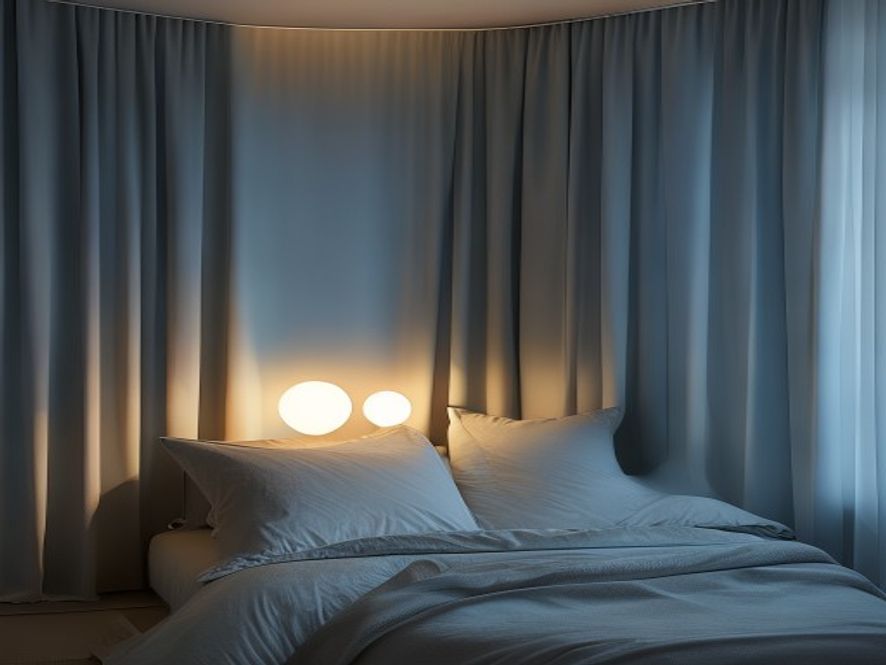
Your surroundings directly influence your sleep quality and ease of falling asleep.
A cool room (16–18°C) supports natural sleep. Your body temperature naturally drops as you prepare for sleep; a cool environment aids this process.
Darkness signals your body to produce melatonin. Blue light (screens) suppresses melatonin. Dim amber lighting 1–2 hours before bed supports natural wind-down.
Silence or gentle ambient sounds work best. Sudden noise disrupts sleep. White noise or nature sounds can mask disturbances.
A supportive mattress, quality pillows, and breathable bedding matter. Your sleep surface should feel inviting and comfortable.
A practical guide to optimising your sleep environment and bedtime routine.
Open a window, use a fan, or try a cooling mattress topper. If you can't control temperature, keep bedding light and wear breathable sleepwear. A cooler room is one of the most impactful sleep improvements.
Yes. Earplugs or white noise (apps, machines) can mask external sounds. Some people prefer a combination: light earplugs plus gentle ambient sound. Experiment to find what works for you.
Blue light from screens suppresses melatonin production. Ideally, avoid phones 30–60 minutes before bed. If you must use one, enable blue-light filters or use blue-light-blocking glasses. Physical books or journaling are better alternatives.
Caffeine (including tea) consumed 4–6 hours before bed can interfere with sleep onset. Alcohol may help you fall asleep but disrupts sleep architecture later in the night. Both are best minimised in evenings.

The 30 minutes before sleep are your opportunity to signal to your body and mind that rest is coming. A consistent pre-sleep ritual becomes a powerful sleep cue.
This ritual is deeply personal. Some find reading calming; others prefer breathwork or gentle movement. What matters is that you do the same practices regularly, creating a predictable signal for your nervous system.
Our 14-Day and 90-Day programmes include detailed pre-sleep ritual templates you can customise to your preferences.
Explore Our ProgrammesStart with our free sleep-preparation checklist or enrol in a guided programme.
Download Sleep Guide