Mental Transition
Rituals signal to your mind that the day is concluding. They create a psychological shift toward rest and recovery.
Learn specific, evidence-informed practices to transform your evening into a calm, intentional wind-down period. Each ritual is designed to help you transition from activity into rest.
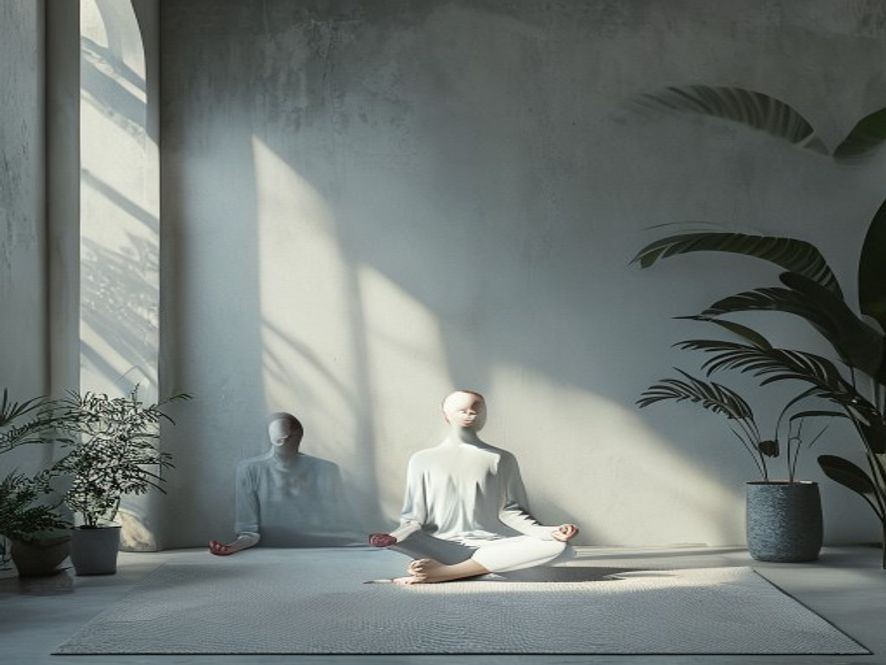
Your evening practices set the tone for the night ahead and influence morning readiness.
Rituals signal to your mind that the day is concluding. They create a psychological shift toward rest and recovery.
Specific practices activate your parasympathetic nervous system, supporting natural relaxation responses.
Regular evening rituals reinforce your body's circadian rhythm, supporting natural sleep-wake cycles.
Closing the day with intentional practice creates psychological closure and permission to rest.
Specific techniques to weave into your evening routine.
Controlled breathing activates relaxation responses. Two foundational techniques:
Inhale for 4 counts. Hold for 4. Exhale for 4. Pause for 4. Repeat 5–8 rounds. This balances your nervous system.
Inhale for 4 counts. Exhale for 8 counts. The longer exhale tells your body it's safe to rest. Practice for 5 minutes before bed.
Slow, intentional movement releases tension without stimulation.
Focus on gentle spine extension, hip opening, and shoulder release. Hold each stretch 1–2 minutes, breathing deeply.
Systematically tense and release muscle groups from toes to head. This teaches your body the difference between tension and relaxation.
Your environment shapes your nervous system state.
Transition from bright light to warm, dim light 1–2 hours before bed. Blue light from screens suppresses melatonin. Use amber bulbs or lamp settings.
A cool bedroom (around 16–18°C) supports sleep. Soft ambient sounds or silence work better than stimulation.
Mental closure supports physical rest.
Write three things you're grateful for. This shifts your mind from problem-solving mode to appreciation, calming anxious thoughts.
Mentally or on paper, acknowledge what happened today without judgment. Let it go. This frees mental energy for rest.
How these practices come together in a two-hour wind-down window.
This is an illustrative example. Adapt timing and practices to your schedule and preferences.
There is no "perfect" evening routine. Your ritual should reflect your lifestyle, preferences, and current needs. What matters is consistency and intentionality.
Start with one or two practices and add gradually. Notice what creates calm in your body. Some people find movement essential; others prefer stillness. Both are valid.
Our 14-Day and 90-Day programmes guide you through building a sustainable personal ritual step by step.
Get Personalised Guidance
Most habits take 4–8 weeks to establish with consistent practice. Everyone is different. Be patient with yourself. The first two weeks may feel deliberate; by week 4–6, practices often feel more natural.
Even inconsistent routines provide value. If your schedule varies, create a flexible ritual you can do in different settings. A 10-minute breathwork practice works whether you're home at 19:00 or 21:00.
Absolutely. Some practices work well in couples or family settings (shared meditation, tea, conversation). Others need solo time. Communicate your needs and find a balance that works for everyone.
Drop it and try another. There are many approaches. If breathwork feels uncomfortable, try stretching or journaling instead. Your ritual should feel supportive, not forced.
Our programmes guide you through choosing, building, and maintaining practices that work for you.
Explore Programmes